Cake pans

Cake pan conversion calculator

Adapt a recipe for a different baking pan: round, square, rectangular or a sheet, with a conversion factor, new amounts, height and baking time.

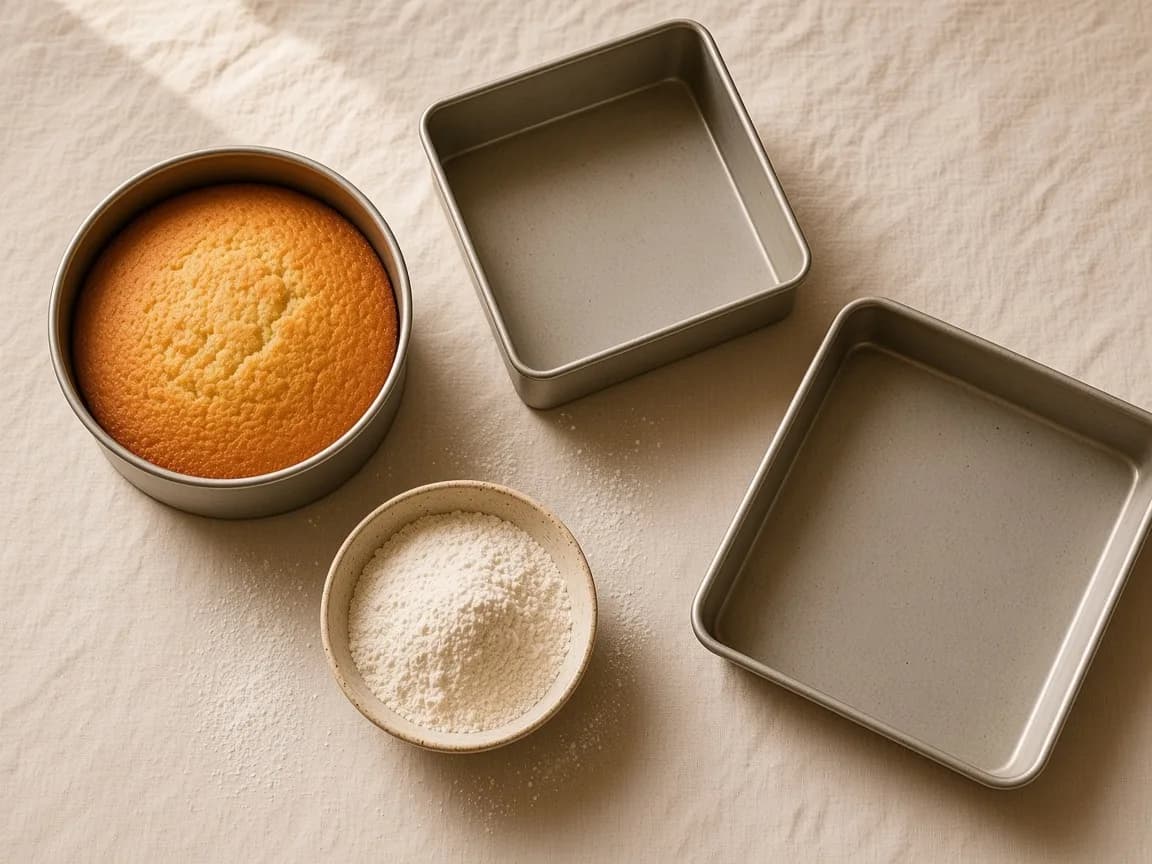
A round sponge, an empty square pan and an empty rectangular pan
Original pan
cm
cm
New pan
cm
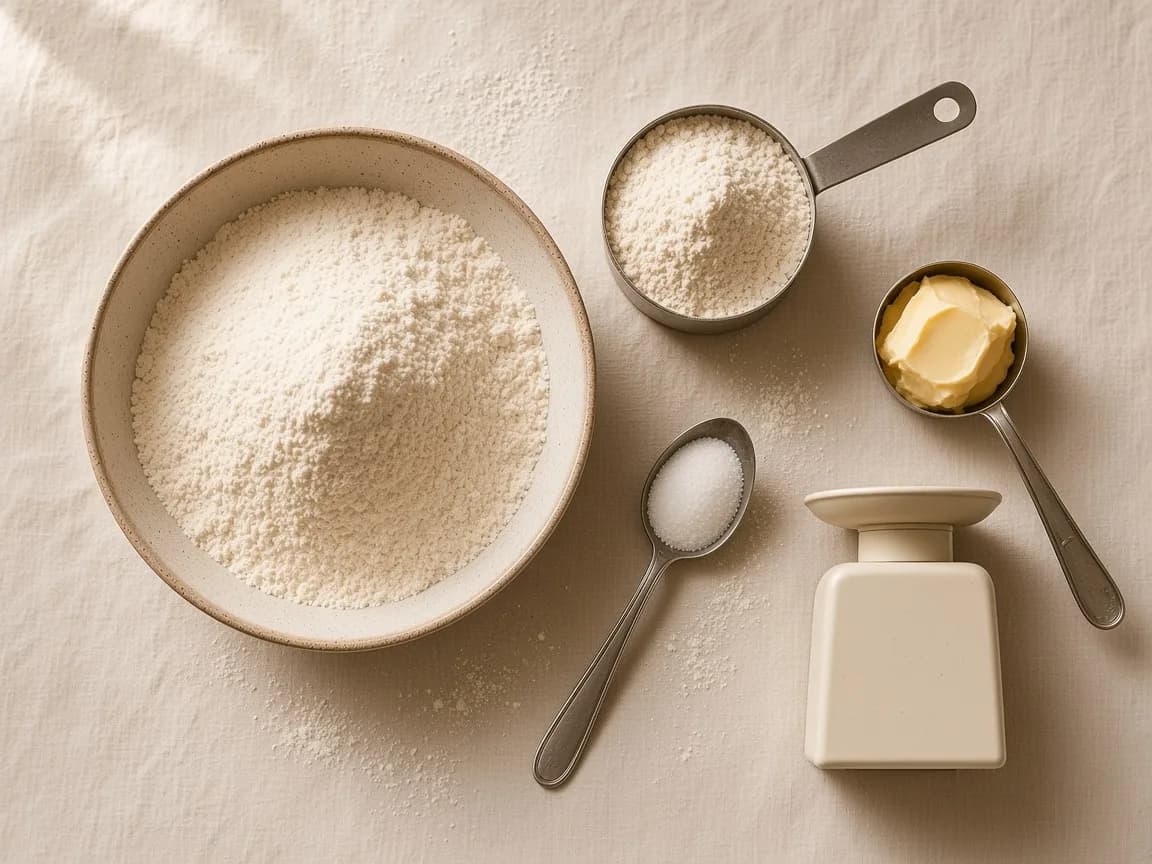
Original ingredients

How to use it

  1. Choose Measured in: Centimetres or Inches. Both pans use that unit.
  2. Set Original shape and its diameter, side, or length and width. Enter Approximate height.
  3. Enter Original baking time in minutes if you know it.
  4. Set New shape and its size. Add ingredient rows if you want the new amounts, eggs included.

What this calculates

Use this when the cake tin you own is not the one in the recipe. It compares areas so the batter can sit at the same depth in the new tin. You need both shapes and their sizes, the height of the batter, and the original baking time if you want a first check.

How it works

The factor is the new pan’s area divided by the original area. A round pan is π times the radius squared. A square is the side squared. A rectangle or sheet is length times width. Ingredients, including eggs, are multiplied by that exact factor. The first check is 90% of the original time, a little less when the new pan is a baking sheet. It is not the area factor times the time. The oven temperature stays the one in the recipe, because the depth of the batter has not changed.

Worked examples

A 20 cm round tin to a 24 cm round tin

Inputs
Both pans round, 20 cm to 24 cm, height 5 cm, original time 35 minutes. Eggs 2 pieces, all-purpose flour 200 g.
Calculation
The radii are 10 cm and 12 cm. The area ratio is (12 ÷ 10) squared, which is 1.44, and the calculator keeps that factor. 35 minutes times 0.9 rounds to the first check. The eggs and flour take the same 1.44.
Result
Factor 1.44. First check at 32 min. Eggs become 2.88 eggs and the flour 288 g.
What it means
Multiply the ingredients by 1.44. Do not bake for 1.44 times 35 minutes. The batter is the same depth, so the time stays near 35 minutes and you start checking at 32.
A 20 cm round tin to a 20 by 30 cm rectangular tin

Inputs
Original round 20 cm. New rectangular pan 20 cm by 30 cm. Height 5 cm, original time 35 minutes.
Calculation
The round area is about 314 cm². The rectangle is 600 cm². Dividing those unrounded areas and rounding the factor to two decimals gives 1.91. The first check uses 90% of 35 minutes again, not 1.91 times 35.
Result
Factor 1.91. First check still at 32 min.
What it means
The tin is much wider, so you need more batter to keep the same height. The bake does not get longer in proportion to that batter. Start checking at 32 minutes and keep going until a skewer comes out clean.

Limitations and common mistakes

  • If you pour the unscaled batter into a larger tin, the cake is thinner and will bake faster. This tool assumes you scaled the batter to the height you typed.
  • Dark pans and fan ovens brown the edges sooner. The minute count cannot see that.
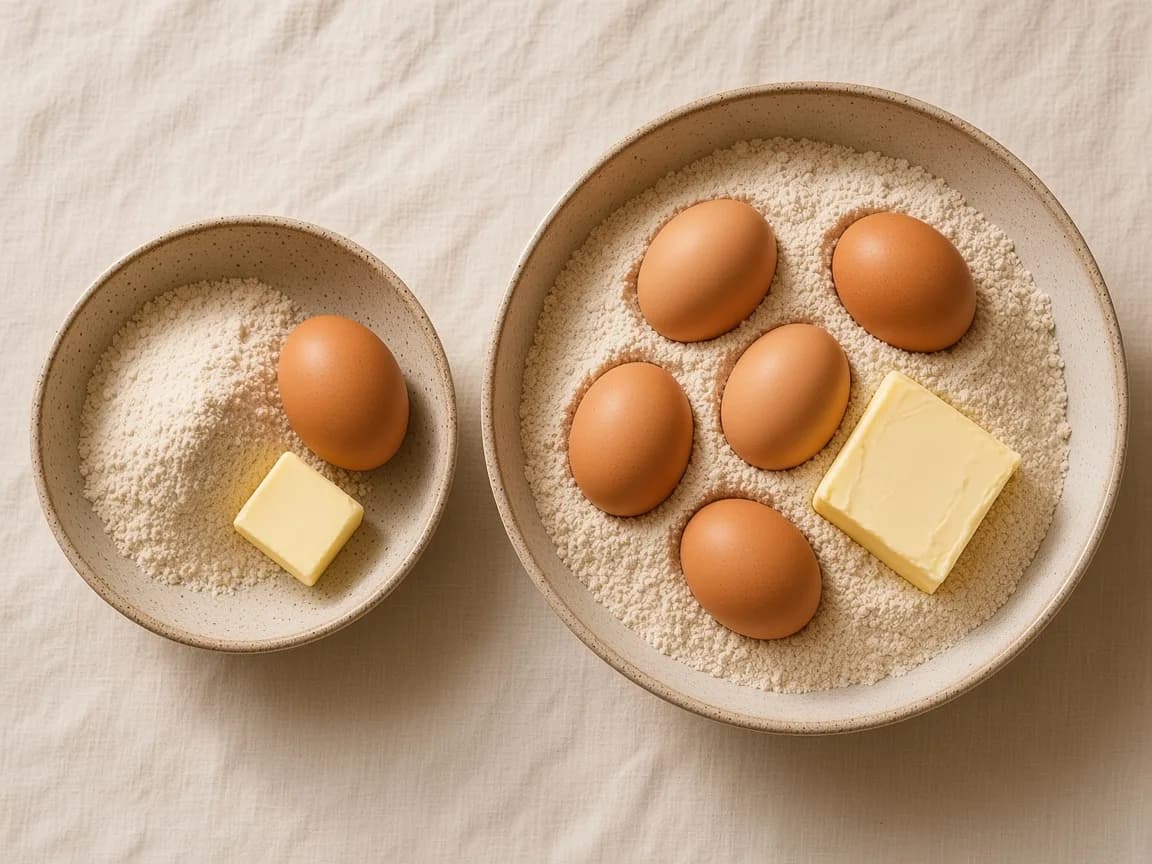
  • A fractional egg stays fractional. Beat it, weigh it, and use that share. The time will not grow just because the egg was awkward to measure.
Common questions

FAQs

Pan area is the useful number. A wider tin needs more batter to sit at the same height; a deeper bake needs a few more minutes in the oven.

Made for home chefs

Your next good meal starts here.

Keep your favorite recipes close, give your week a plan, and make everyday cooking easier with Chefalia.

  • Download on the App Store
  • Get it on Google Play