Baker’s percentage

Dough hydration calculator

Calculate dough hydration and baker’s percentages for pizza, bread and leavened pasta, including salt, yeast, dough balls and how sticky the dough will feel.

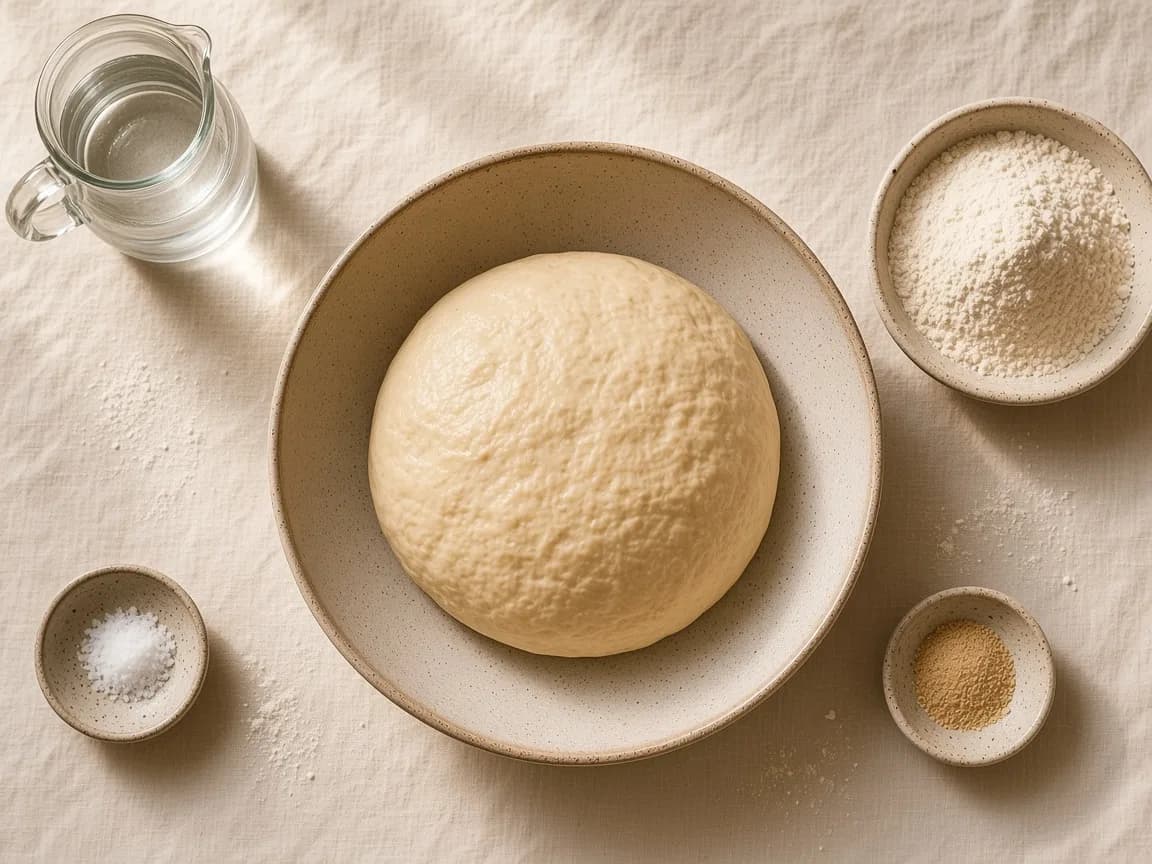
A bowl of bread dough with water, flour, salt and yeast
Start from
g
g
Leave blank to use the hydration percentage.
%
%
%
Instant dry yeast, as a baker’s percentage of the flour.

How to use it

  1. Choose Type of dough. Pizza starts at 62% hydration, 2.8% salt and 0.2% instant yeast. You can change each one.
  2. Choose Flour and enter Amount of flour, or choose Dough balls and enter Number of dough balls and Weight per ball.
  3. On the flour path, leave Amount of water blank to use the hydration percentage, or type a water weight and the percentage is calculated from the two weights.
  4. Read the grams, the total, and the split into balls. A remainder is dough left after the full balls, not a missing ingredient.

What this calculates

Use this to turn baker’s percentages into grams for pizza, bread, focaccia or leavened pasta. Flour is the 100% line. You can start from the flour you have, or from the number and weight of dough balls you want. Hydration, salt and yeast are shares of the flour, not of the finished dough.

How it works

Water, salt and yeast are each a percentage of the flour weight. The total is those four weights added. From a flour weight, the full balls are the total divided by the ball weight, and what is left over is shown on its own. An even split is offered when that remainder is more than zero, so the whole batch can be shared without a scrap. From a target of balls, the flour is the target weight divided by 1 plus the three percentages, and each ingredient is then rounded. 62% of the flour is not 62% of the finished dough.

Worked examples

1000 g of flour at 62% hydration

Inputs
Pizza, Flour, 1000 g of flour, hydration 62%, salt 2.8%, yeast 0.2%. Ball weight left at 250 g.
Calculation
Water is 62% of 1000 g. Salt is 2.8% of 1000 g. Yeast is 0.2% of 1000 g. Adding the flour back gives the total. Full 250 g balls use as many as fit, and the rest stays as a remainder. The even split divides the whole total instead.
Result
620 g water, 28 g salt, 2 g yeast, 1650 g of dough. 6 balls of 250 g, with 150 g left over. Or 7 balls of 235.7 g.
What it means
62% means 620 g of water for 1000 g of flour. It does not mean 62% of the 1650 g total. That would be a different dough.

Four balls of 250 g

Inputs
Pizza, Dough balls, 4 balls at 250 g, hydration 62%, salt 2.8%, yeast 0.2%.
Calculation
The target is 4 times 250 g. Flour is that target divided by 1.65, because 100% flour plus 62% water plus 2.8% salt plus 0.2% yeast is 165% of the flour. Each ingredient is then rounded from the flour weight.
Result
606 g flour, 376 g water, 17 g salt, 1.2 g yeast. 1000 g of dough, four balls, nothing left over.
What it means
The rounded grams come back to the 1000 g you asked for. You do not also add a remainder on top.
Limitations and common mistakes

  • The yeast percentage is instant dry yeast. Fresh yeast is about three times that weight. A long cold ferment usually wants less than a same-day dough.
  • Olive oil for focaccia sits outside the water percentage. Add it on top of this formula.
  • A very wet dough needs folds. Dusting the bench with extra flour lowers the hydration you just calculated.
Common questions

FAQs

Hydration is the water as a percentage of the flour. Salt, yeast and dough balls use that same baker’s percentage scale.

Made for home chefs

Your next good meal starts here.

Keep your favorite recipes close, give your week a plan, and make everyday cooking easier with Chefalia.

  • Download on the App Store
  • Get it on Google Play