Food cost

Cost-per-recipe calculator

Calculate total and per-serving cost, then compare budget and premium options for common ingredients.

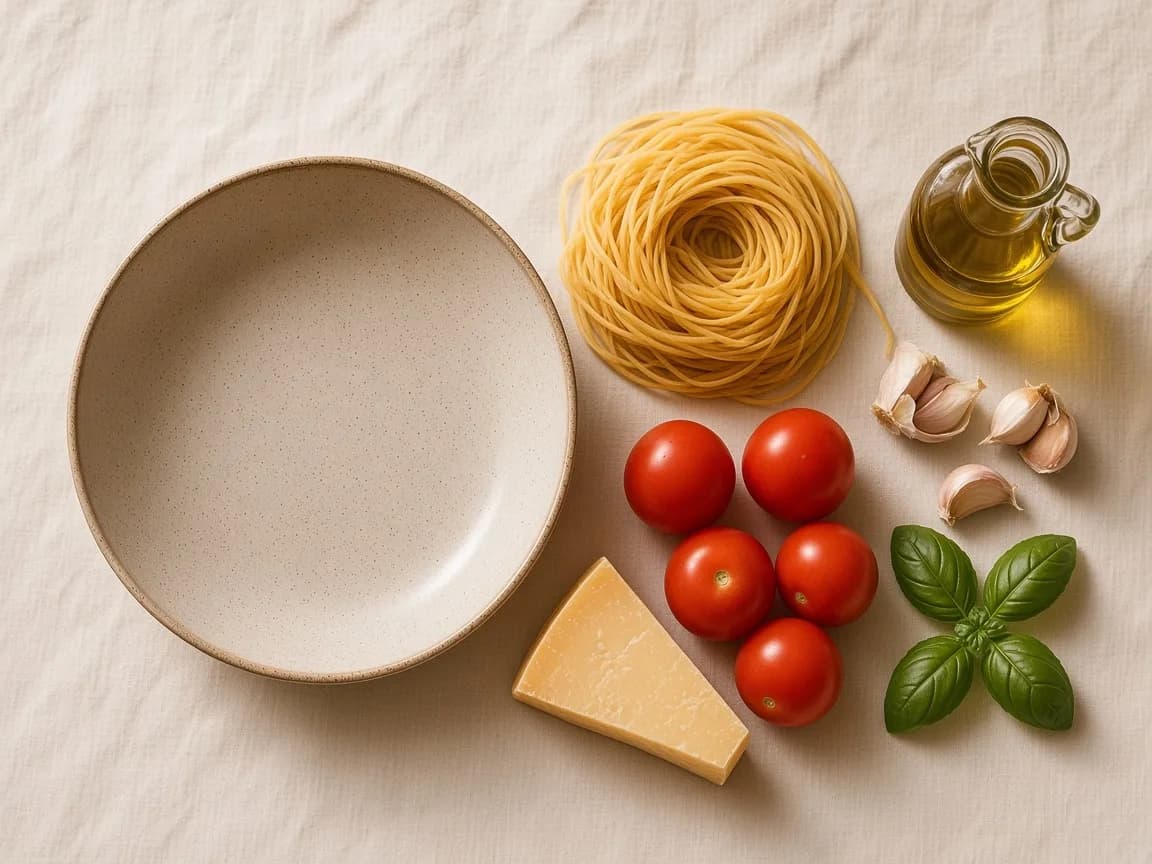
Dry spaghetti, tomatoes, parmesan, olive oil, garlic and basil beside an empty bowl
$
Optional. Oven, hob or mixer.
$
Optional. Boxes, paper or wrap.
%
Share of the selling price spent on food. Used for the illustrative price.
$
$
$

How to use it

  1. Enter Servings and choose Currency. The examples on this page are US dollars.
  2. For each ingredient, enter the amount used, its unit, the pack price, the pack quantity and the pack unit. The amount and the pack have to be the same kind of unit: weight with weight, volume with volume, or pieces with pieces.
  3. Leave Energy cost and Packaging cost at zero unless you want them in the total.
  4. Food cost target starts at 30%. Change it if you want the illustrative selling price on a different share. Then calculate.

What this calculates

Use this to turn pack prices into the cost of the food you actually put in the dish, and into a cost per serving. You type the servings, the currency, and for each ingredient the amount used and what the pack cost. Energy, packaging and a food-cost target are optional. The selling price is an illustration you can edit. It is not a price the calculator tells you to charge.

How it works

The consumed cost is the amount used, divided by the pack quantity, times the pack price, after both amounts are in the same base unit. Buying whole packs is separate: you pay the pack price once for every pack you have to open. What is left in an opened pack is remaining value, which is stock, not waste. The illustrative selling price is the total cost divided by the food-cost target. At the starting 30%, that is the total divided by 0.30. Labour, rent and the rest of the overhead are not in that figure.

Worked examples

A batch that uses $2.80 of ingredients, for 8 servings

Inputs
8 servings, US dollar, food cost target 30%. One ingredient: amount used 1 piece, pack price 2.80, pack quantity 1 piece. Energy and packaging left at zero.
Calculation
The whole pack is used, so the consumed cost is 2.80. Divided by 8 servings is 0.35. The selling illustration divides 2.80 by 0.30.
Result
$0.35 per serving. Illustrative batch price $9.33, which is $1.17 a serving, at a 30% food-cost target.
What it means
The 30% lives in Food cost target and you can edit it. At 40% the same 2.80 batch would be illustrated at 7.00, because 2.80 divided by 0.40 is 7. Neither number includes your time.
200 g of butter from a 250 g pack at $2.50

Inputs
Butter, 200 g used, pack price 2.50, pack quantity 250 g.
Calculation
200 divided by 250 is 0.8. Times 2.50 is 2.00, the butter that went into the dish. The other 50 g is still in the pack: 0.2 times 2.50 is 0.50. You still pay 2.50 at the shop.
Result
Consumed cost $2.00. Remaining stock $0.50. You buy the pack for $2.50.
What it means
The 0.50 is not waste unless you throw the rest away. If the leftover is something that will spoil, the calculator suggests a smaller pack or another dish. Butter can wait.

Limitations and common mistakes

  • Every price is one you type. Nothing here is a live supermarket price.
  • There is no waste field. Leftover pack value stays stock. Declaring it as waste would double-count food you can still cook.
  • The selling price ignores labour and overheads. Raise the food-cost target, or treat the figure as a floor, if you need those costs covered.
Common questions

FAQs

Pick your currency, then price each pack. The share of the pack you use is what goes into the dish; what stays in the pack is shown as remaining value.

Made for home chefs

Your next good meal starts here.

Keep your favorite recipes close, give your week a plan, and make everyday cooking easier with Chefalia.

  • Download on the App Store
  • Get it on Google Play