Doneness

Cooking time calculator

Estimate cooking time from the food, weight or thickness, whether it is fresh or frozen, and the method — oven, stovetop, grill, air fryer or pressure cooker.

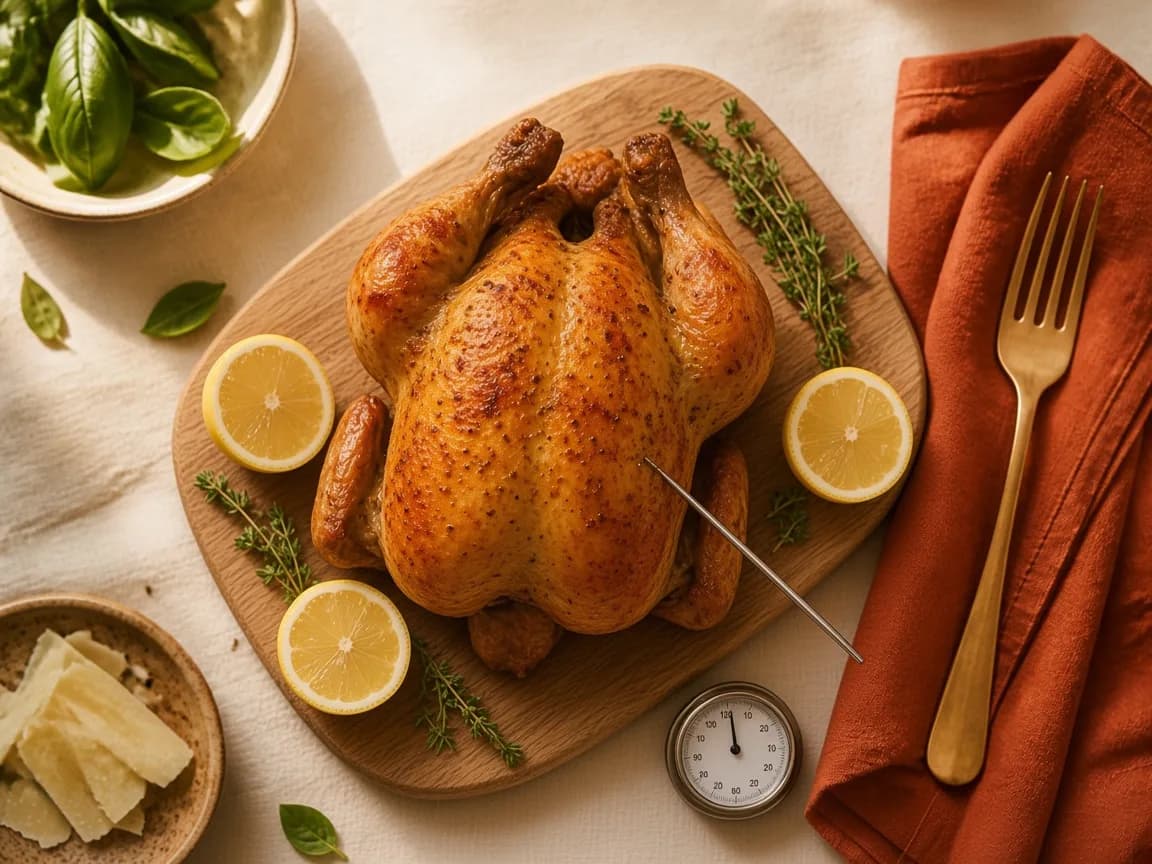
A roast chicken with a thermometer probe and a kitchen timer

How to use it

  1. Choose Food. A whole chicken asks for Weight. A steak asks for Thickness.
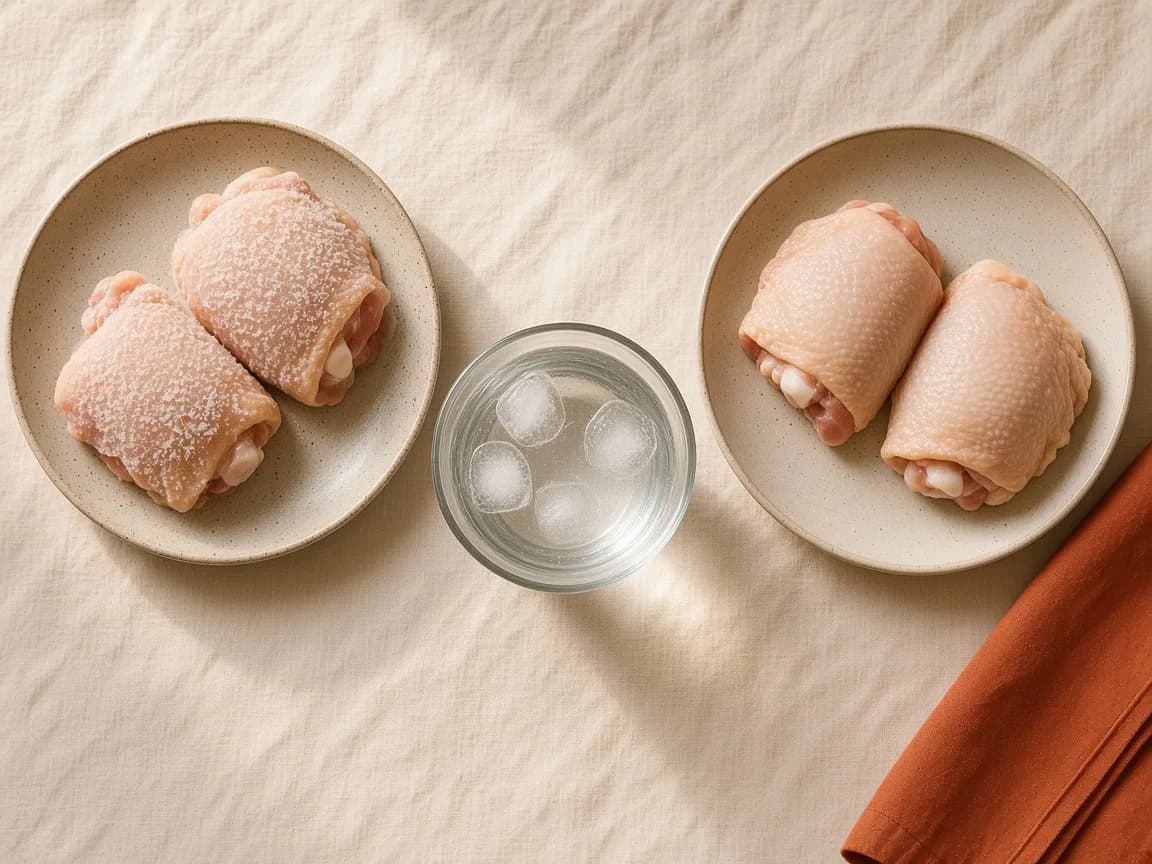
  2. Set Condition to fresh or frozen. Frozen food in the oven or air fryer usually takes about half as long again.
  3. Choose Cooking method. For an oven, choose Conventional oven or Convection / fan oven.
  4. Choose Doneness when the form offers it. Read the time, any first check, the rest, the doneness target and the safe minimum as separate lines.

What this calculates

Use this to pick a first cooking time from the food, its weight or thickness, whether it is fresh or frozen, and the method. The number is a time to start checking. A thermometer, not the clock, decides when it is done. Where a doneness sits below the recommended internal temperature, the page says so and does not call that temperature safe.

How it works

For a food sized by weight, the minutes start from a base, then add the kilograms times a minutes-per-kilogram rate. A steak uses centimetres of thickness times a minutes-per-centimetre rate, times a factor for the doneness you chose. Frozen food then multiplies the total where that method allows it. The result is rounded. When a first check is shown, it is 90% of that time. The temperature on the dial is the appliance. The temperature in the centre is the internal target. Resting is extra time off the heat. A doneness target below the reference minimum is labelled as such.

Worked examples

A 1.5 kg chicken in a conventional oven

Inputs
Whole chicken, 1.5 kg, fresh, Oven, Conventional oven.
Calculation
The oven rate is 20 minutes plus 40 minutes per kilogram. 20 plus 1.5 times 40 is 80 minutes. The first check is 90% of that, rounded. The dial is 200°C / 400°F. The rest is separate.
Result
1 hour 20 min in the oven, first check at 1 hour 12 min, then rest 15 min. Safe minimum: 74°C / 165°F in the thickest part, not touching bone.
What it means
74°C in the thickest thigh, not touching bone, is the recommended minimum. Juices running clear are not a substitute. Do not serve it cooler than that and call it done.

A 2.5 cm steak, grilled to medium

Inputs
Beef steak, 2.5 cm thick, fresh, Grill, Medium.
Calculation
The grill rate for medium is 3.2 minutes per centimetre. 2.5 times 3.2 is 8 minutes. Medium’s centre target is lower than the recommended minimum for a whole cut of beef, pork or lamb.
Result
8 min on a high grill, then rest 5 min. Doneness target 60°C / 140°F. Recommended minimum: 63°C / 145°F in the centre, then rest at least 3 min.
What it means
60°C is the medium target, not a safe temperature. The reference minimum is 63°C, followed by a rest of at least 3 minutes. Medium sits below it. For a child, an older adult, someone pregnant or anyone with a weakened immune system, cook to the minimum instead.
Limitations and common mistakes

  • The clock does not know a hot spot, a cold steak straight from the fridge, or a bone in the joint. Check early.
  • A steak this size is under 15 minutes, so there is no separate first-check line. Use a thermometer anyway.
  • Rare and medium-rare are further below the minimum. The result names them as doneness targets. It does not call them safe.
  • Frozen eggs in the shell are refused. Frozen steaks are refused on the grill and in the pan, because they cook unevenly.
Common questions

FAQs

Times are a starting point. Heat, starting temperature and the shape of the food all change the result, so check before you serve.

Made for home chefs

Your next good meal starts here.

Keep your favorite recipes close, give your week a plan, and make everyday cooking easier with Chefalia.

  • Download on the App Store
  • Get it on Google Play